Something unusual happened in August 2026: four major hearing aid brands — ReSound, Oticon, Phonak and Signia — each launched a new AI flagship within two weeks of each other. It's the clearest sign yet that hearing technology has entered a new era. But "powered by AI" doesn't mean they all work the same way — and as an independent clinic carrying all of these brands, we're not here to tell you one is universally "the best." We're here to tell you honestly what each one actually does, including a first-in-Australasia, three-weeks-in comparison from someone who's actually worn two generations of it.
Why Doesn't "Louder" Mean "Clearer"?
For decades, the gold standard was directionality: face the person you want to hear, and your hearing aids form a narrow "beam" toward their voice while suppressing everything else. It worked, but life doesn't happen in a straight line — it happens in 360 degrees.
The limitation was never just the microphones. Standard processors have long treated clarity as a matter of volume. But in a crowded Hamilton café, simply turning things up just adds to the "wall of sound" — and leaves you exhausted by the end of the meal.
Today's flagships don't just amplify — they analyze, using Deep Neural Networks (DNN) trained on millions of real-world sound samples to tell a human voice apart from clattering cutlery and background hum, in milliseconds.
How Does Each Brand Approach AI Differently?
Four major brands launched new AI flagships within two weeks of each other in August 2026. Here's the full lineup at a glance, with a closer look at the three most technically distinct approaches below.
Oticon Reveal, Launched Aug 2026: World's first Dual AI system
Phonak EON, Launched Aug 2026: 25% smaller/lighter, more processing power
Signia Pure Charge&Go MaX, Launched Aug 2026: Quad-processor multi-speaker tracking
ReSound Sensia, Launched Aug 2026: Tuned to favour whoever you're facing
Phonak EON — Smaller Chip, More Power
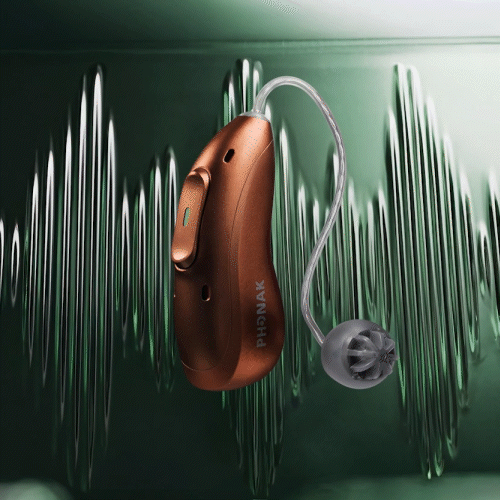
EON is Phonak's successor to Infinio Sphere. Its HyperSonic chip is retrained specifically for AI-DNN processing through Spheric Speech Clarity 3.0 — delivering roughly 25% more sound-processing power than the previous DEEPSONIC chip, in a device that's 25% smaller and 20% lighter, with battery life stretching to 38 hours. AutoSense OS AI 8.0 scans the listening environment up to 700 times per second, blending directional focus and noise reduction on the fly.
The story here isn't a new trick — it's the same "grab speech out of chaos" philosophy as before, just re-engineered to disappear more into your ear while doing it.
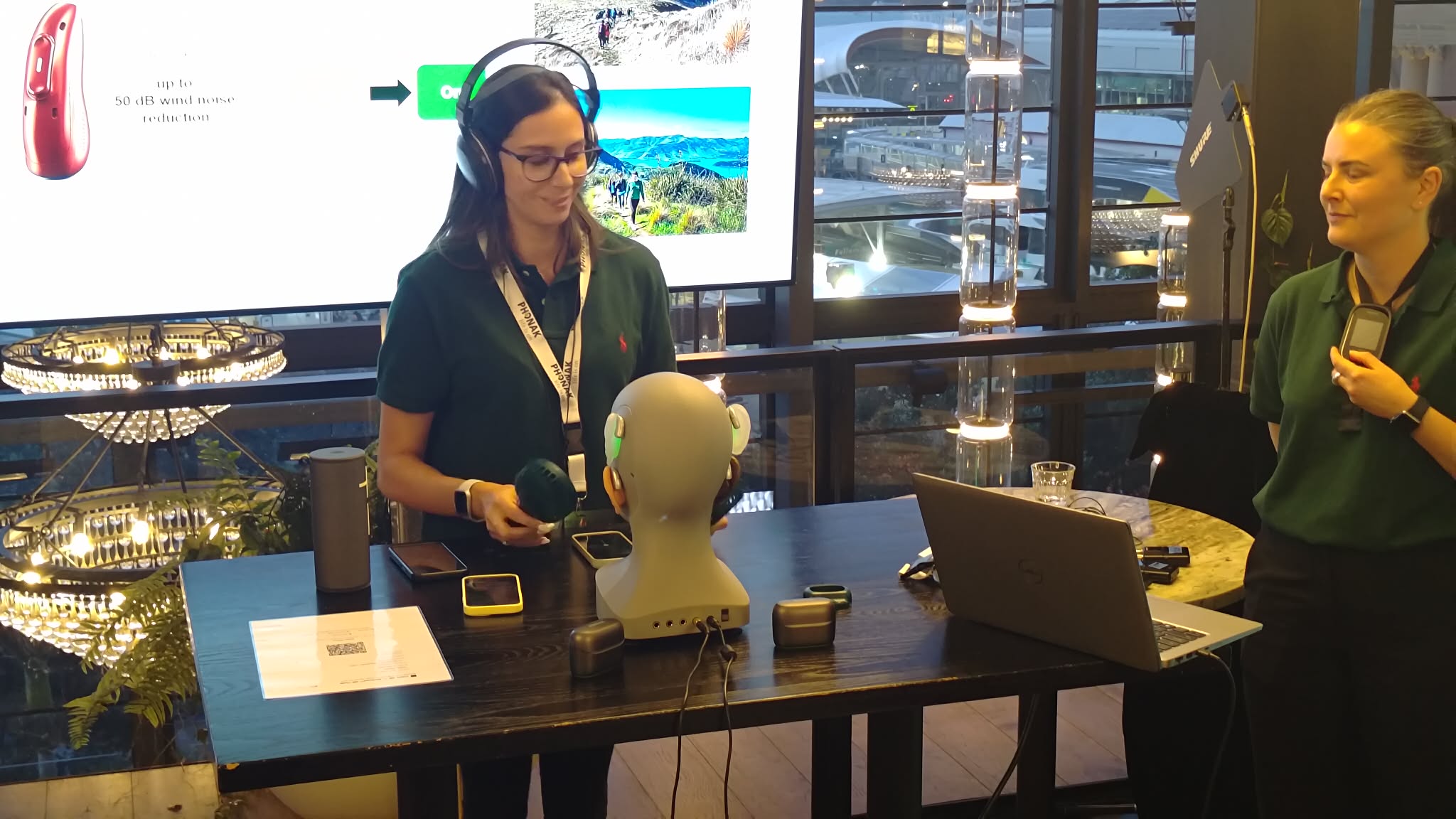
At Phonak's Auckland launch event, we saw this demoed on a "Tramping the Crater Rim Track" scenario: WindBlock 2.0 cuts wind noise by up to 50 dB, switching between "off" and "on" so you can hear the difference live. It's a very New Zealand way to prove a point — if it holds up on an exposed ridge line, it'll hold up in a windy Hamilton car park.
What Someone Who's Actually Worn Both Says
Specs are one thing. Real-world comparison is another — and we happen to have it. Actress and 2020 New Zealander of the Year Jennifer Ward-Lealand wore Phonak's Infinio Sphere for two years. Three weeks ago, she became the first person in Australasia to receive EON. We caught up with her for her honest, unscripted comparison after three weeks of daily wear.
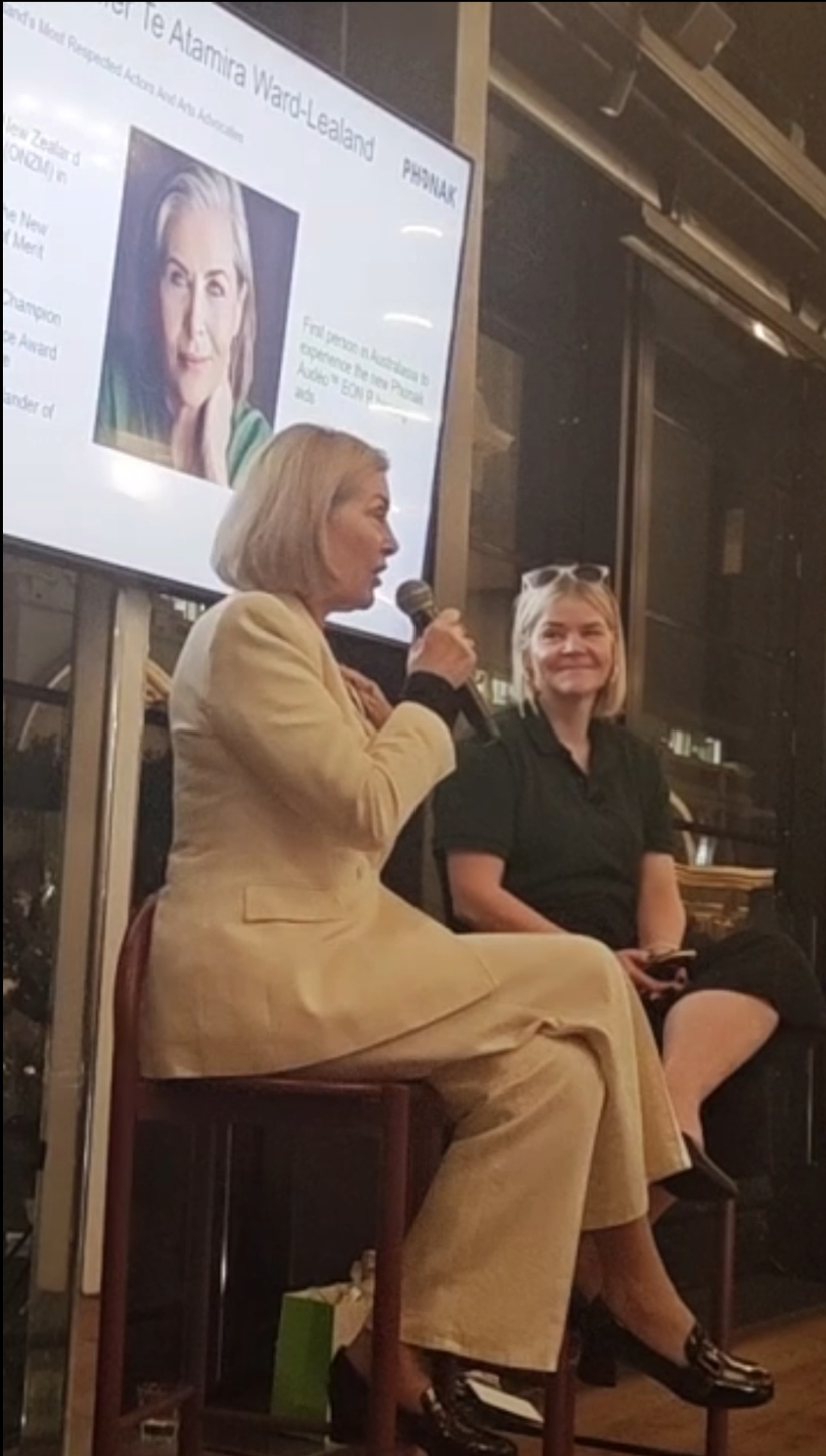
"Watch Jennifer's full comparison"
We're not the ones telling you EON is an improvement. Someone who wore the previous generation for two years is.
Oticon Reveal — Two AI Systems Running at Once
Reveal is the first hearing aid built on what Oticon calls Dual AI: a Speech AI and a Context AI running simultaneously rather than one system trying to do both jobs. Speech AI continuously identifies and enhances the voices around you; Context AI analyses everything else and decides what background sound is actually worth preserving.
In practice, this shows up as up to 25dB more gain than competing devices, a Reveal Optimizer that catches feedback faster and more precisely, and a Wind & Handling Stabilizer that cuts wind and handling noise by up to 40dB — genuinely useful if you spend time outdoors in Hamilton's weather.
Signia Pure Charge&Go MaX 7 — Built for Rooms Full of People
Where EON and Reveal focus on isolating speech from noise, the MaX 7 is built specifically for tracking multiple moving conversation partners at once — its four processors run 4D hearing and Multi-speech tracking simultaneously, so it doesn't lose the thread when the person talking to you turns their head or someone new joins in.
It also reaches a frequency response of 10,000 Hz on its smaller receivers — higher than most competitors — which matters if you care about how music or higher-pitched voices come through, not just conversational speech.
Which of these three suits you depends less on "which is more advanced" and more on your actual daily situations — a busy dinner table calls for something different than a windy walk or an evening of music.
What Does This Actually Feel Like, Day to Day?
Meet "John." For years, his hearing was fine in quiet rooms — but a family Sunday roast was a wall he couldn't get through. He'd spend two hours nodding and smiling, actually hearing very little.
Last Sunday, as John leaned in to hear his granddaughter, his device's motion sensors caught the tilt of his head and narrowed focus to her voice. When his son cracked a joke from across the table, the AI caught it as speech too — clear, without John turning his head. By the end of the meal, he wasn't exhausted. The AI had done the work of sorting the room, so his brain didn't have to.
That's the shared promise across all seven of these platforms — even though each one gets there a different way.
Why Doesn't AI Alone Guarantee Clear Hearing?
AI is excellent at cleaning up a soundscape — but it still has to deliver that sound to a human ear, and some ears have cochlear dead regions: spots where damaged sensory hair cells can no longer transmit sound to the brain.
Older hearing aids just turned up the volume in those dead spots, producing distorted sound. Modern processors instead use frequency mapping — identifying the dead regions and shifting vital speech cues (like "s" or "sh" sounds) down into a lower, healthier range the brain can actually use. Think of the AI as the engine, and this mapping as the GPS: it makes sure the sound actually arrives somewhere your brain can understand it.
This is exactly why the "best" brand on paper isn't automatically the best device for you.
How Does Veritas Hearing Make Sure the AI Performs at Its Best?
Even the most advanced Deep Neural Network is only as good as the clinical map it's given. Because we're independent and carry all seven of these brands, our job isn't to sell you a platform — it's to match one to your actual hearing profile, through:
- Real-Ear Measurement (REM) — specialised microphones measure exactly what's happening at your eardrum, so the AI isn't guessing
- Mapping the terrain — we identify your specific dead regions, so the technology knows exactly where to shift sound for clarity
- Personalised automation — we fine-tune noise reduction and sensor sensitivity to your actual lifestyle, whether that's the RSA or gardening in Hillcrest
The AI provides the capability. Professional clinical calibration provides the result.
Frequently Asked Questions
Q: Which of these 2026 hearing aids is the best?
A: There isn't a single winner — each brand solves the "noisy room" problem differently (motion sensors, dual AI systems, quad processors, sound mapping). The right one depends on your specific hearing profile and lifestyle, which is exactly what we assess.
Q: Is it worth switching if my current hearing aid still works?
A: Not automatically. If your current device still serves you well, these new platforms are worth knowing about — not necessarily worth upgrading to immediately.
Q: How do I know which platform actually suits me?
A: Book a comprehensive hearing assessment. Since we carry all seven brands, our recommendation is based on your hearing and your life — not which platform we're trying to move.
Curious which of this year's platforms actually fits how you hear? Book a hearing assessment with an independent Veritas Hearing audiologist — Hamilton, New Zealand.